what to do if someone steals your design
What to Practise if Someone Steals Your Design
Protecting your intellectual property has always been a difficult chore and the Internet has merely served to complicate matters. The web has become an unoriginal designer's i finish shop for endless fabric to shamelessly ripoff. Today we'll have a look into some of the reasons design theft is then rampant online and explore some answers to the essential question of what to do if someone steals your pattern. A large thanks to Von Glitschka for providing much of the content and communication seen beneath!
The Problem
Putting your piece of work on the web gives you next to zip control over who views that content and what they do with it. Your portfolio site could be stomping grounds for someone looking for a quick logo design, website layout, etc. One of the main bug here is that information technology'due south so easy to simply grab a piece of artwork off of someone'southward site, reproduce it, sell it and never get caught. Information technology'southward also virtually impossibly to monitor this kind of theft to any successful caste without significant resources. The best yous can do on your ain is merely hope that no 1 is stealing your work and that yous or someone else volition notice if information technology e'er does happen (learn how to obtain commercial protection below).
A Fine Line
Another major problem is defining what exactly constitutes a theft of intellectual property. The online design community is currently obese with daily doses of "inspiration" contained in blog posts. We designers mail and utilize this content to admittedly influence our own projects. Browsing the designs of others can requite you bang-up ideas for color schemes, theme ideas, graphical styles, layout alternatives and any number of other possibilities.
However, there is an immensely fuzzy line between inspiration and theft. Exactly where that line lies is perchance dissimilar for every designer. My best advice is to consciously avoid ripping off the ideas of others past using inspirational artwork as a leaping betoken for your own significantly different creation. Unfortunately, fifty-fifty if you're on your best behavior, at that place's still no shortage of people out in that location that aren't then honest. To prove my betoken, let'south await at some real life examples from an creative person who seems to have quite the ongoing struggle with this very issue.
The Vonster Scandals
Anyone active in the online design community has probably heard or seen a thing or 2 from Von Glitschka (@vonster for my swain Twits). Von is an amazingly talented Illustrator with a portfolio rich in impressive grapheme illustrations, hand drawn lettering and logo designs. Unfortunately, equally Von has discovered, you can brand people like your work so much that they want to claim information technology as their own. He frequently encounters instances of companies or individuals using and/or selling his artwork completely without consent (a whopping sixteen times in 2009 lonely!).
Militarist Mascot
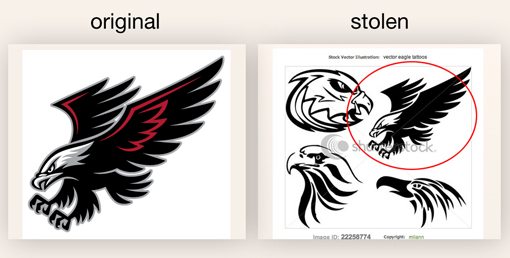
The original artwork to a higher place was non simply ripped off, but actually uploaded to a stock art site to sell to other designers! The ignorance this thief showed towards the likelihood of someone finding this is quite remarkable!
Tribal Tattoo Face up
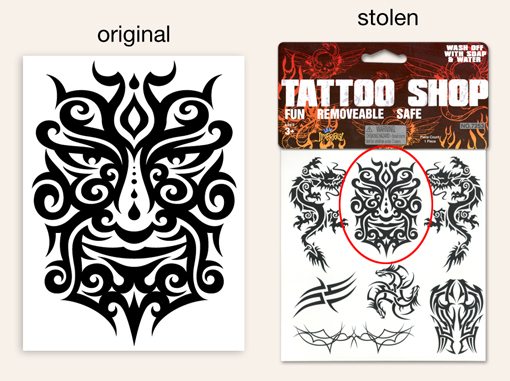
In this instance a toy visitor grabbed Von's artwork and sold information technology in the real world equally function of a children's temporary tattoo package. Information technology definitely makes you wonder where the other tattoo art came from every bit well!
Barf Bag Art
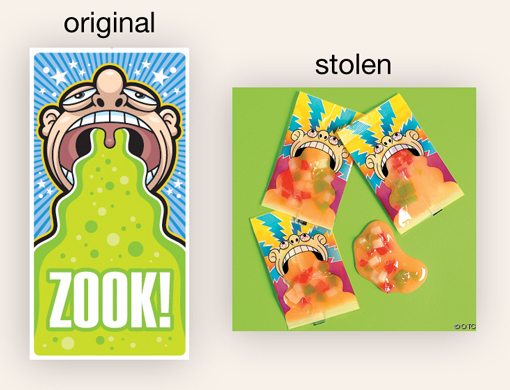
Every bit you tin see in the images above, the theft isn't ever an outright re-create of the fine art as with the previous 2 examples. This artist took the fourth dimension to adjust the facial features a fleck, no doubt to give themselves a little arguing room should they become caught. Here we see that fine line between inspiration and theft existence flirted with. Some might say that the concluding event is different enough than the original to no justify theft, all the same I disagree completely (and then did Von). The angle of the head, the shape of the cheek line and teeth, the oval nostril holes, and the waviness lines of the spew are all far too similar for the artist to merits that the artwork is original.
How to Respond
If y'all find that someone has indeed used your artwork without consent, the easiest matter to practice is to get mad (or even flattered) and brush it off as out of your control. The about difficult thing to do is launch a wildly expensive and drawn out legal battle that volition probably cost you more money than you'll proceeds. Both of these reactions are adequately undesirable and shouldn't necessarily be your beginning choice. Here are a few tactics to try kickoff (some directly from the Vonster himself).
Study It To The Site Owner
If yous find the infringement on a stock fine art site or something similar, odds are they take a reporting system in place and actually take copyright infringement very seriously. Recently I encountered just such a state of affairs on one of the Envato marketplaces when another author uploaded a slice of art that seemed indisputably based on my best selling item. I simply clicked a button that said "report item" and gave a cursory argument equally to why I thought this represented an infringement. Within 24 hours the art was removed and the author had written me an apology for any similarities his artwork bore to my own. The ease of this solution makes it among the best possible, but it applies only in very specific circumstances and won't even be an option with most infringements yous run into.
Do Your Homework
If the infringement occurs exterior of a controlled community, the kickoff thing you need to do is go aware of your rights. The Digital Millennium Copyright Human action (DMCA) seems to be the standard slice of legislation that covers yous in these circumstances. Every bit Von points out on his blog, y'all technically ain the rights to your own artwork whether you've officially filed whatever paperwork to that end or not. However, possessing an actual legal copyright beforehand makes it much easier to pursue prosecution of the theft.
Write a Copyright Infringement Letter
After you lot've researched a bit and empathise your rights, the next step is to contact the company or individual disseminating your artwork without approval. In that location are guidelines fix along by the DMCA regarding what should be contained in this letter. Fortunately, skillful onetime Von has written enough of these that he has created a template that does the piece of work for you. In this alphabetic character he outlines each requirement and gives an example judgement for how to address the requirement in the letter.
Hopefully, the infringement alphabetic character will be enough to make the offender back down. If you come beyond every bit a calm professional, knowledgeable of your rights and intent on resolving the thing, y'all'll observe that many businesses or individuals will be eager to seek an end the situation earlier it becomes besides serious.
Go Public
One particularly interesting tactic that Vonster discovered was to inform his Twitter followers of the transgression. This can lead to lots of helpful advice and an all out insurgence of enraged designers completely willing to flood the offender with angry emails. An angry mob is a lot harder to ignore than a lone complainer!
The Big Guns
Obviously, there are several scenarios where reasonable requests simply don't appeal to unreasonable people. In these circumstances, you'll accept to find a decently affordable copyright attorney to dorsum you lot upwardly. Always exist mindful of how much time and resources you're willing to spend to ensure the problem is resolved.
A List of Demands
Upon finding out that your art has been stolen your initial reaction will no doubt be to cry out for retribution. As soon as an chaser enters the matter you might even have a tendency to first thinking about a hefty settlement. My advice for this is to analyze the state of affairs carefully before making whatever demands.
Obviously, the first matter to request is that your artwork be immediately removed from wherever it is being used. After this, the key question to inquire yourself is how much you lot remember the visitor or individual has unlawfully profited from your artwork. In some circumstances this number could be substantial but in many more instances it will exist quite minimal. Endeavor to avert being greedy as exuberant requests will complicate matters and ensure a negative response from the person or company in question. If you're unsure as to their profit, it is often appropriate to asking a usage fee proportional to what yous would've charged them for the art in the first place (plus a slight PIA charge of course).
Keep in mind that if your artwork is being used in a commercial product, pulling it off shelves volition consequence in serious financial setbacks for the offending visitor. This will of form cause them to resist heavily but if you succeed in getting the detail pulled know that a little justice has been served merely by that action lone.
Prevention
If you're concerned that you may become a victim of intellectual property theft, you lot'll want to seriously consider sending off the paperwork to copyright certain items you see every bit high-chance. Other than that, you lot should explore options for digitally watermarking your images to rails and forbid theft. Below are a couple of possible solutions for you to check out.
Digimarc
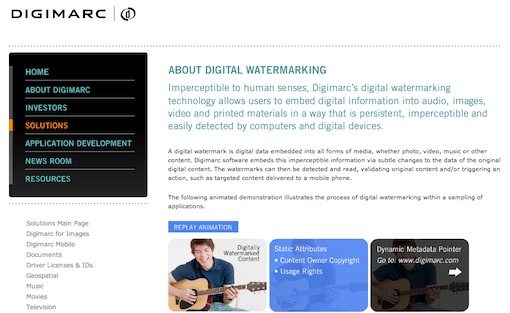
"Imperceptible to human senses, Digimarc's digital watermarking technology allows users to embed digital information into sound, images, video and printed materials in a fashion that is persistent, imperceptible and easily detected by computers and digital devices."
Civolution

"Civolution is a leading provider of technology and solutions for identifying, managing and monetizing media content. Civolution offers an all-encompassing portfolio of watermarking and fingerprinting technology solutions for forensic tracking of media avails in pre-release, digital cinema, PayTV and online. Through its service portfolio, Civolution offers globe-form circulate and internet intelligence to help media content owners control their assets and unlock new acquirement streams."
Decision
Having your artwork stolen is no walk in the park. It's a messy, time-intensive problem that will do it'south very best to leave you lot frustrated and tired of fighting. I hope this article has shed a little lite into how to answer to this growing trouble, before and/or after information technology occurs to you.
Have you e'er had your artwork stolen? Permit us hear your stories in the comments below. Exist sure to share whatever advice y'all have to others going through the same problem.
Source: https://designshack.net/articles/graphics/what-to-do-if-someone-steals-your-design/
0 Response to "what to do if someone steals your design"
Post a Comment